úterý 8. dubna 2014

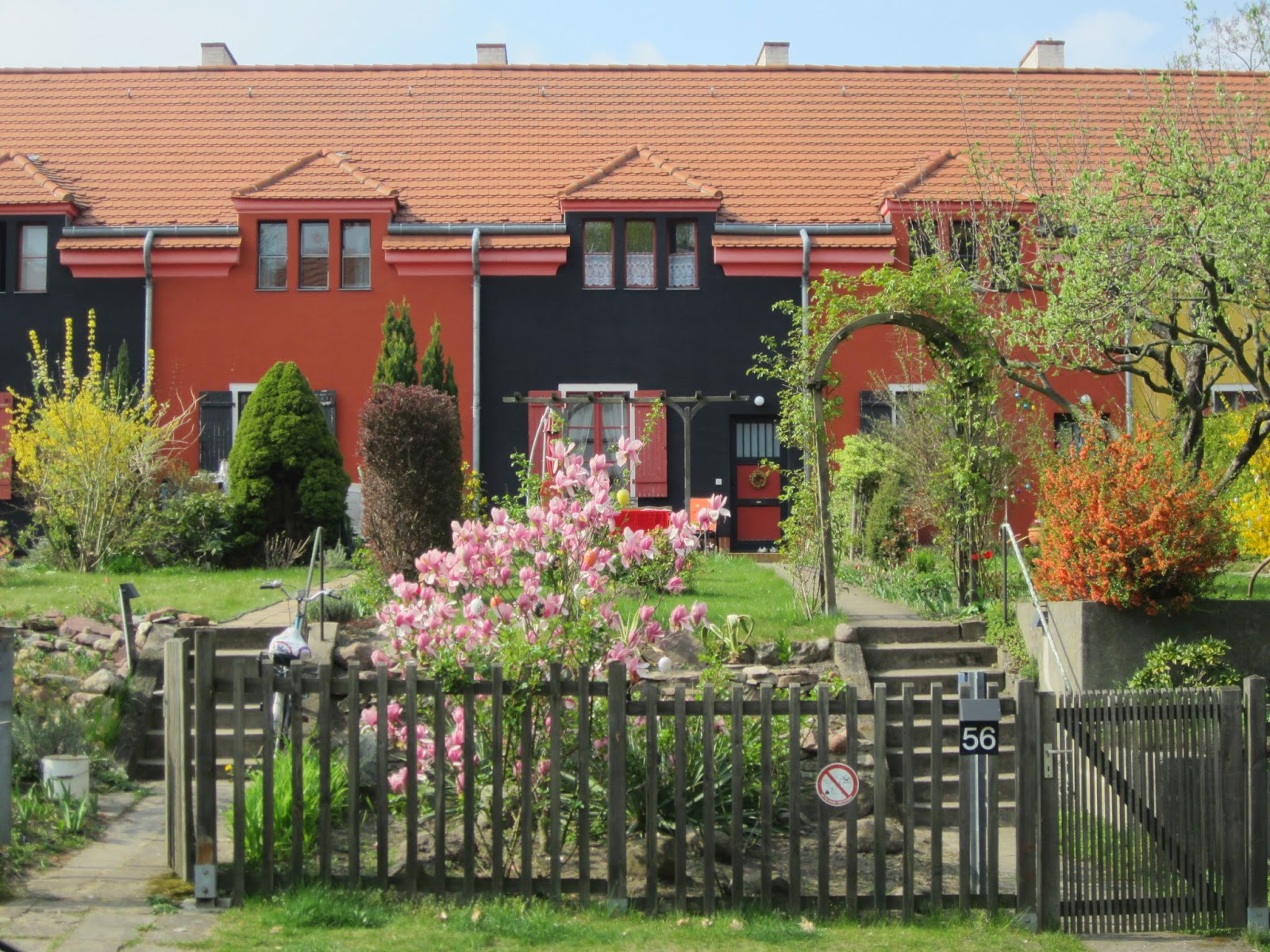
Gartenstadt Falkenberg, Berlin, Bruno Taut, 1913-1915

April 2014
Spring has come early this year; the place is full of colours, more than just those that Taut designed one hundred years ago for the façades. With everything in bloom this may look almost kitschy, but was this sunny Sunday my fault? I could not peek inside, but I noticed one fact: pathways to the black-and-orange row houses are separate, but there are no fences among the gardens. Luckily the smallest, oldest and most distant of the Berlin's six Unesco-protected Siedlungen seems to live its own life.


neděle 2. února 2014

Bråkdalbelgen, Rondane (1915 m)


July 2013

After a steep walk on masses of grey rocks, I am on the hilltop. On the east, a cliff falls down several hundred metres to the valley. The other peaks are close – Ljosåbelgen, Storsmeden, Trolltinden. Far in the north I see the ridge of Snøhetta. I turn back to the west where I came from – a storm is approaching through Gudbrandsdalen. It trundles along the valley. Stange, watching the rainy clouds and lightings from above, being safe for the moment at this exposed place. Time to go back.  Before long, the white fog reaches me.


sobota 25. ledna 2014

City Library, Tromsø, Norway


August 2013

New in the old; quite literally. In Tromsø – the biggest city excepet Russia above the Arctic Circle – they decided to build a library. The old cinema from the fifties (Ulf Dreyer, 1957-58) has been carefully eviscerated, keeping the monocoque, and a new structuctued built inside. The original architect, still alive then, was also the author of the new project.

Nové ve starém, docela doslova. V Tromsø – mimo Rusko to je největší město za polárním kruhem – se rozhodli postavit knihovnu. Staré kino z padesátých let (Ulf Dreyer, 1957-58) v roce 2005 pečlivě vykuchali a zachovali skořepinu, do které vestavěli novou budovu (pod vedením původního architekta, který byl ještě naživu).


během přestavby

původní stav

Institut for samfunnsforskning, Munthes gate 31, Majorstuen, Oslo, M. & P. Capellen, Eliassen + Lambertz-Nilssen, 1960, extension 1980 (Munthes gate 31).

April 2013

A beautiful building, close to Aalto with its combination of brick and copper. Institute for Social Research. This public institution is welcoming, an employee shows me around... Almost needless to point this out again: I am in Norway.

Krásná stavba, v kombinaci cihly a měděného plechu se blíží Aaltovi ze čtyřicátých a padesátých let. Institut pro sociální výzkum. Norsko: asi je už docela nuda psát to sem, ale i tady byli vstřícní, přidělili mi paní, která mě provedla po budově.


Kaufhaus Tyrol, Innsbruck, David Chipperfield, 2010

October 2012

What can be done so that the people do not escape out of the city for shopping? Put the shopping malls in the historical centre. Chippefield quite keeps his credit with this. Close by there are the Rathaus Gallerien by Perrault: the shopping mall swallowed the city hall and its entrance is hard to find now.

Co dělat, aby lidi neprchali za nákupy ven za město? Umístit nákupní střediska v historickém centru. Chipperfield to zvládl docela se ctí. Kousek dál ale mají ještě Rathaus Gallerien od Perraulta: nákupní centrum tu pohltilo i městskou radnici a vchod do ní se mezi obchody docela těžko hledá.


La Mémé, Woluwe-Saint-Lambert, Belgium, Lucien Kroll, 1970-72

June 2011

How far can one go with participation? The buildings of the medical faculty with student homes. The students could choose what would their room be like; they also took part in creating the common rooms. A variation within the free grid. Not many went any farther than this – at least not until the whole thing fell apart. The site of la Mémé is still standing and functioning after forty years, with the usual Belgian degree of shabbiness.

Kam až jde zajít s participací? Učební budovy lékařské fakulty s kolejemi. Studenti si mohli zvolit, jaký bude jejich pokoj, podíleli se i na utváření společných prostor. Variace v rámci volného rastru. Dál už moc nikdo nezašel – aspoň ne tak, aby se to nerozpadlo. Areál La Mémé i po čtyřiceti letech stojí, tak průměrně belgicky omšelý, a funguje.


Safranbolu, Turkey


May 2009

A town on hills, full of Osman houses from the 19th century, with its own canyon in the middle. Wonderful buildings: a comfortable, generous standard. I sit in the shadow of a walnut tree and drink the sweet tea. Safranbolu is protected by Unesco, the tourists are mainly Turkish and there is not much of them in the spring. (No one has probably walked down to the end of the canyon to see a giant mound of waste in the landscape).

Město na kopcích, plné osmanských domů z devatenáctého století, s vlastní roklí uprostřed. Skvělá stavení: pohodlný, velkorysý standard. Sedám si do stínu ořešáku a piju sladký čaj. Safranbolu je chráněno Uneskem, z většiny je opravené, turisti jsou hlavně turečtí a na jaře jich tu moc není. (Nikdo z nich asi nikdy nedošel tou roklí až na konec jako já, aby spatřil obří hromadu odpadků v krajině.)